Literary Thinker, Researcher, and Teacher
Specializations: Transnational, Global, and Postcolonial Literature | African and African Diaspora Literature | World Literature | Critical Theory | Translation Studies | Psychoanalysis
He completed his PhD in Comparative Literature at the University at Buffalo in 2023, where he has also taught in the English Department as a visiting assistant professor from 2023 till 2025.
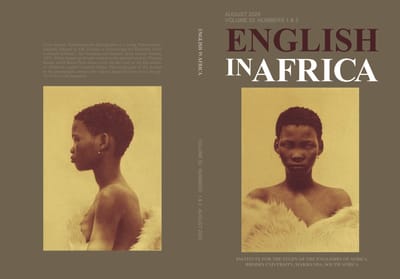
His research focuses on the significance of allegorical thinking in 20th and 21st century novel, with a special focus on the function of translation in anglophone fiction. His work has appeared in English in Africa, Cultural Critique, and The Comparatist.
Publications
Co-Edited Journal Issue

Psychoanalysis from Elsewhere, Penumbr(a), A Journal of Psychoanalysis & Modernity, vol. 4 (Co-Editor with Fernanda Negrete)
Psychoanalysis sets itself apart from the rest of Western thought by its theoretical and clinical investment in the unfamiliar ––das Unheimlich–– as a key site of knowledge. In this light, the impact non-Western life practices and knowledge systems have had on psychoanalysis remains understudied. The substantial momentum of this issue arises from this gap as it tracks the traces left behind by psychoanalysis outside the West. However, the journey we wish to undertake is not from outside the West back to psychoanalysis; such an approach would return us to the scene of extraction of intellectual resources from around the world in the service of the West. Instead, we seek to reverse the direction of the flow of this inquiry to ask what psychoanalysis has to offer to peo- ple situated in spaces outside the Western world. We understand psy- choanalysis to be a practice that refuses to reduce what is Other to the familiar, and we also see it as an unheimlich practice endlessly undergo- ing transformations in its encounters and trajectories in the elsewhere.
Read MoreSelect Conferences

On Listening: Murmurs and the Topology of the Ear
Abstract: Listening is a complicated act that is often reduced to the function of receiving encoded messages. In this paper, I will explore and examine other functions of the ear that resist and yet are integral to meaning generation. In particular, I will bring the concept of “vestibularity,” as developed by Rizvana Bradley in Anteaesthetics (2023) and Hortense Spillers in “Mama’s Baby, Papa’s Maybe: an American Grammar Book” (1987) with reference to black art and black feminine subjectivity respectively, into a conversation with Derrida’s examination of Tympan (eardrum), which is central for understanding how philosophy resists itself, in Margins of Philosophy (1982). The purpose of this study is to find a mode of attunement to different frequencies of sounds of protest that fall on the ear as murmurs and reverberate long after the meaning content of those sounds has been analyzed, discussed, debated, decimated, and digested. These murmurs that carry a specific charge of protest, and which resist the analytical functions noted above, are interlaced within the very materiality of the sounds but often remain undetected or are entirely undetectable. An attunement to these frequencies will make audible how we can resist the neutralization and reduction of protests to their base meaning. To this end, I will examine protest recordings, music by artists such as Nina Simone, James Baldwin’s radio recordings, and Franz Fanon’s “The Voice of Algeria” (1965), among other sources.
Learn More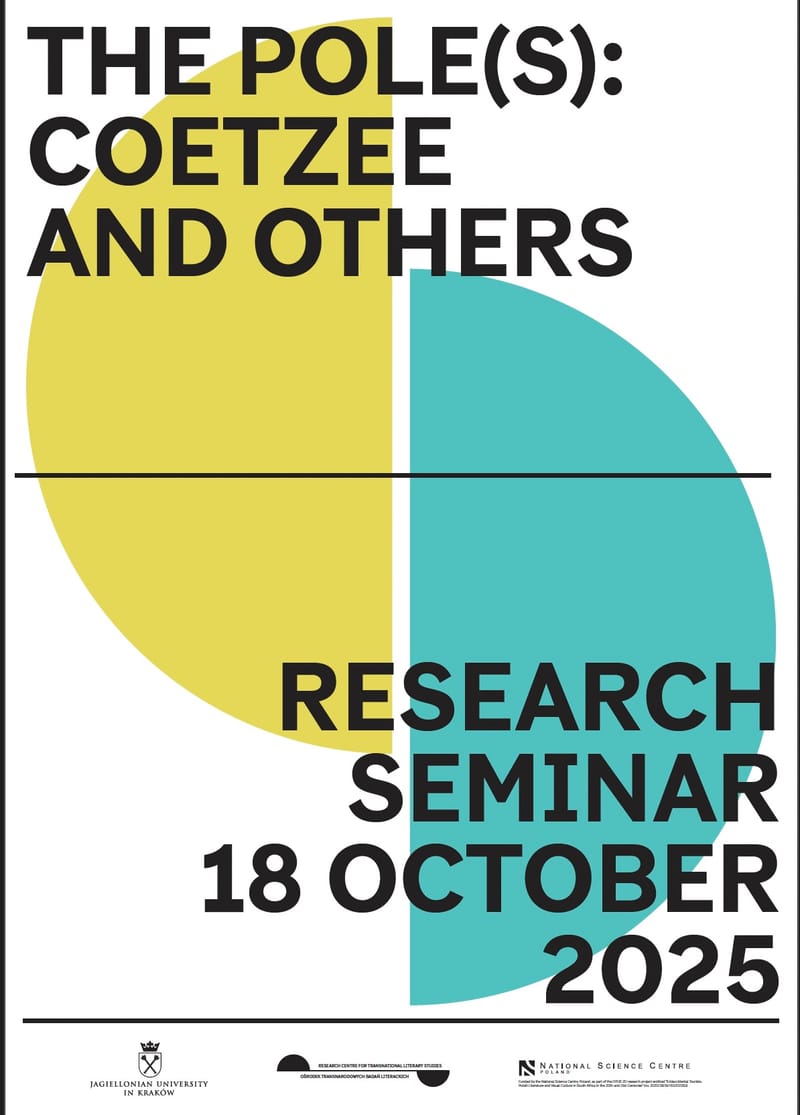
“Extra-Poetics of the English Language in The Pole”
The Pole(s): Coetzee and Others, Research Seminar, Jagiellonian University, Kraków, Poland
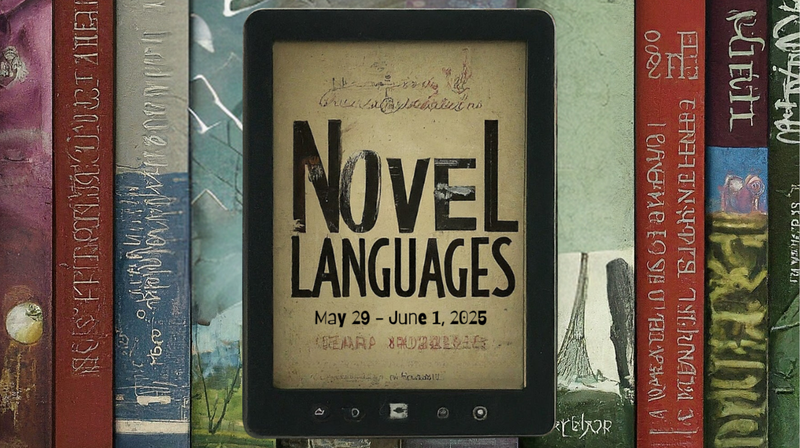
A Rootless Language
Novel Languages, Society for Novel Studies Biennial Conference, Duke University, Durham, North Carolina
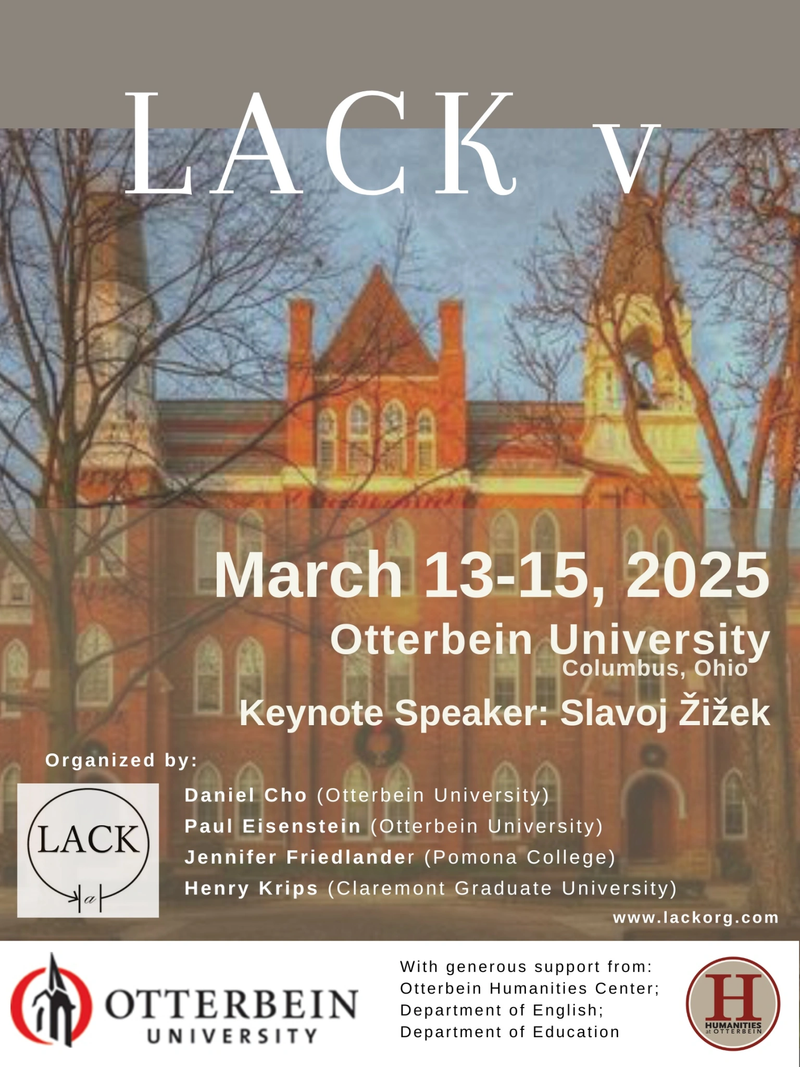
The Epidermal Racial Schema and Psychoanalysis
LACK V Conference, Otterbein University, Columbus, Ohio
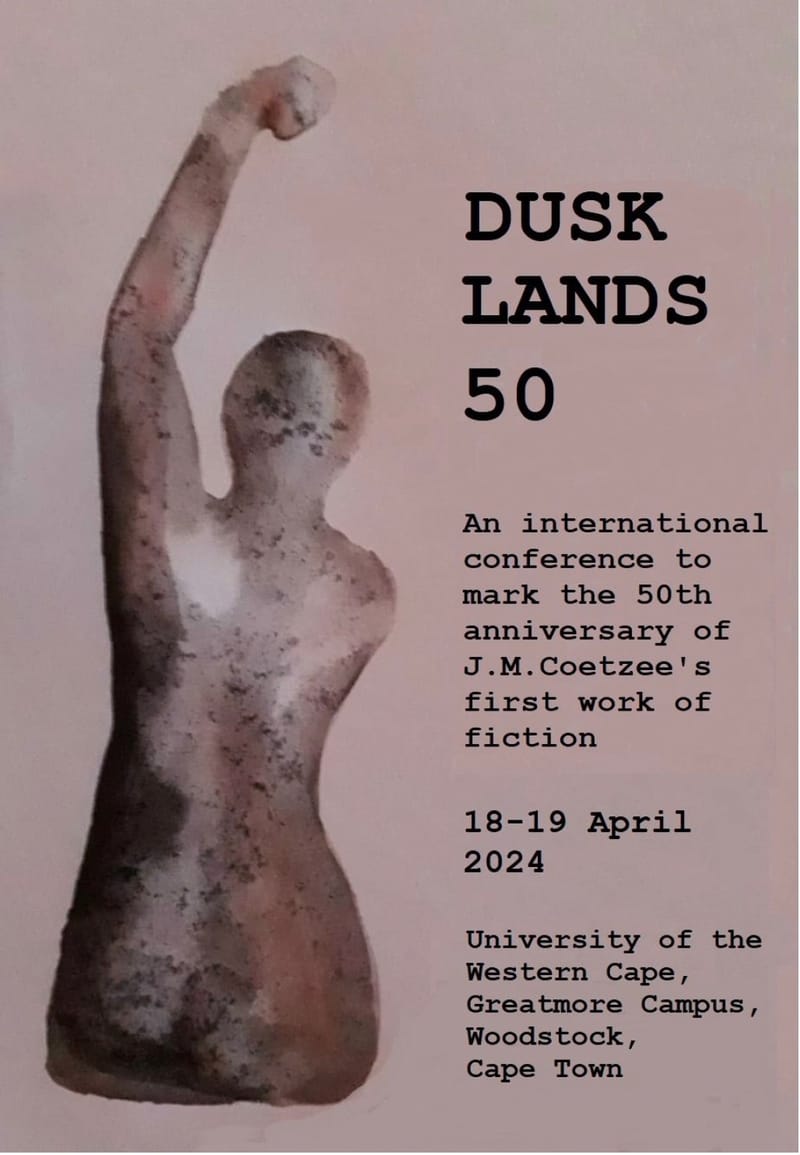
At the Limit of Form: Re-examining the Problematics of Form and Meaning in Coetzee’s Early Fiction
Dusklands at Fifty Conference, University of Cape Town, Cape Town, South Africa (Remote)
On Idleness in South Africa
Southern Concepts, American Comparative Literature Association (ACLA) Annual Meeting, Chicago, Illinois
Photography, or the Form of Shame
Northeastern Modern Language Association (NeMLA), Baltimore, Maryland
Book Project

The Shadow of a Word: Thinking Allegorically with J.M. Coetzee
The Shadow of a Word reconfigures our understanding of allegory in twentieth and twenty-first century literature and philosophy. This book is focused on the works of a single author as it is interested in elaborating upon the intricacies of the term allegory rather than the variety of its forms in contemporary literature. However, the findings of this book are pertinent to the works of various other contemporary authors. J.M. Coetzee, the South African novelist who was awarded the Nobel prize in 2003, is the sole focus of this study because his fiction offers a singular point of access to study the structure of allegory and allegorical thinking in the contemporary world shaped by the histories of colonial and racial violence. Despite the centrality of allegory and allegorical thinking in postcolonial fiction and criticism, this issue has received surprisingly little attention in recent scholarship, even though it is a powerful theoretical operator for many scholars.
Contact
- 40 Marshal Baghramyan Ave. | American University of Armenia | Yerevan, 00019 | Republic of Armenia